
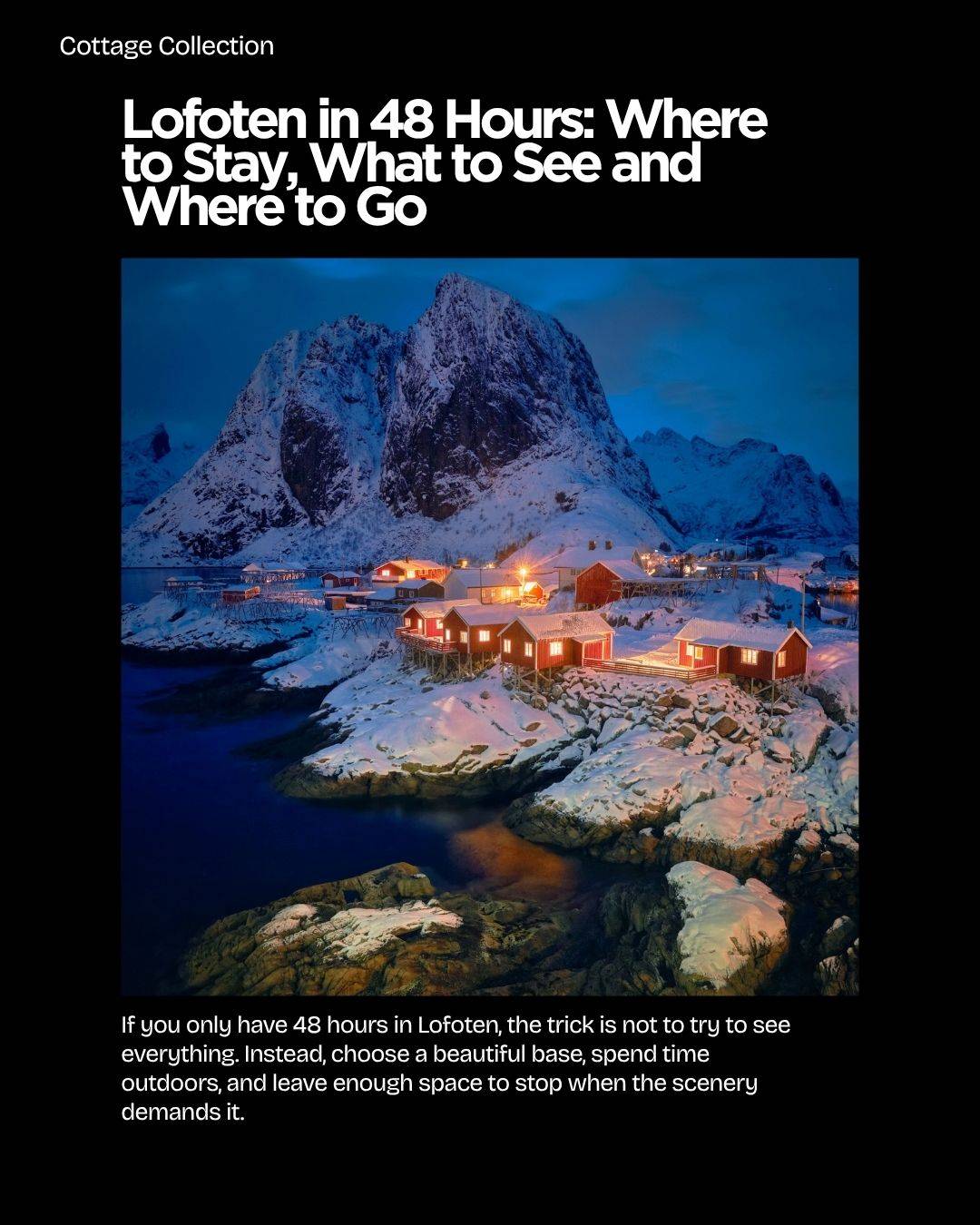

There are places that reward a slow arrival, and then there is Lofoten. Rising dramatically from the Norwegian Sea, this Arctic archipelago is all jagged mountains, open water, white-sand beaches, and small coastal communities. It is the kind of landscape that can make even a short trip feel much longer.
If you only have 48 hours in Lofoten, the trick is not to try to see everything. Instead, choose a beautiful base, spend time outdoors, and leave enough space to stop when the scenery demands it. Lofoten’s roads are part of the experience, with mountains and sea appearing around almost every bend. The official Norwegian Scenic Route through Lofoten is known for its combination of dramatic scenery and coastal culture.
For a short break, Fredvang Lodge, Lofoten, makes an appealing base. Located in Fredvang, it places you close to some of the area’s most memorable landscapes, including the route towards Kvalvika and Ryten. The surrounding area is particularly well suited to travelers who want their Lofoten stay to center around nature rather than a packed sightseeing schedule.
This guide keeps things simple: where to stay, how to spend your first day, where to head on your second, and how to make a two-day visit feel genuinely memorable.
Why Spend 48 Hours in Lofoten?
Two days may not sound like enough time for an Arctic archipelago, but Lofoten is unusually well suited to a short nature-focused escape.
The appeal is largely visual. Mountains rise sharply from the sea, beaches appear between rocky peaks, and small coastal communities sit within an immense landscape. The region is also a year-round destination, with long summer days and opportunities to experience the Northern Lights during the darker months.
A 48-hour itinerary works particularly well if you prioritise one memorable hike, scenic driving, and time outdoors rather than trying to tick off a long list of attractions.
The other advantage is flexibility. You can shape your visit around the season. Summer brings long daylight hours and the possibility of the midnight sun, while autumn and winter offer a completely different atmosphere and the chance of seeing the Northern Lights.
The important thing is to treat the itinerary as a framework rather than a race.
Where to Stay: Fredvang Lodge, Lofoten
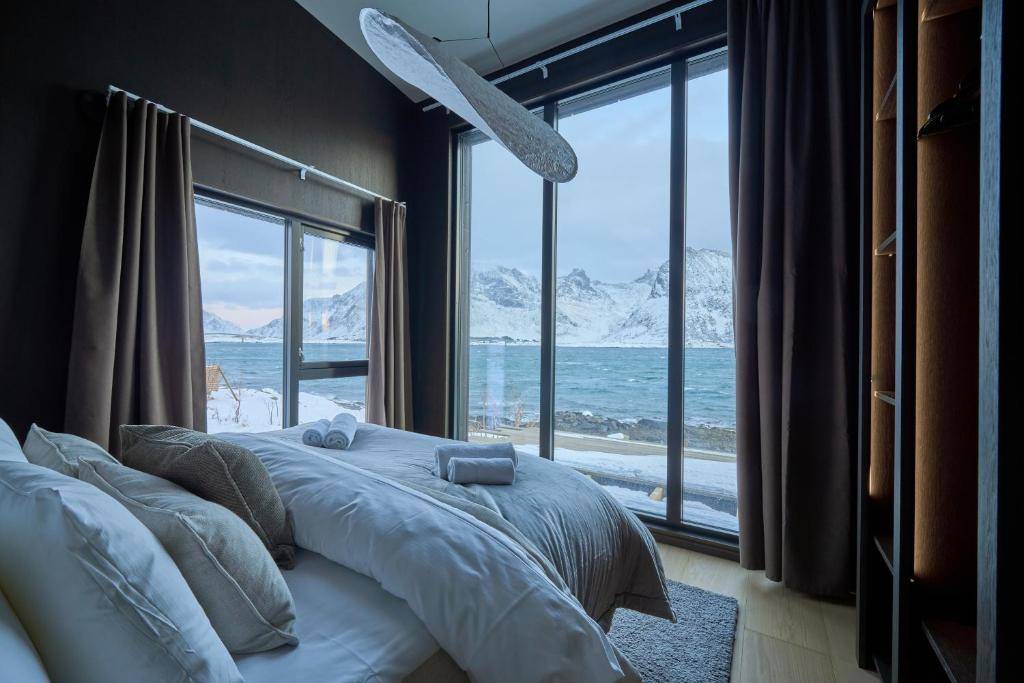
Fredvang Lodge, Lofoten
Fredvang Lodge, Lofoten, offers a spacious holiday-home setting in Fredvang, making it a particularly practical choice for travelers planning a short escape centered around the surrounding landscape. Current accommodation information lists four bedrooms, two bathrooms, a living room, dining area, and kitchen, alongside features including a terrace, garden, sauna, Wi-Fi, and private parking. It also has a sea-facing setting, giving the accommodation a strong connection to the scenery that brings visitors to this part of Norway.
Its location is one of its strongest advantages for a two-day itinerary. Fredvang provides access to the wider natural landscape while keeping the focus on a quieter side of Lofoten. Nearby Ytresand Beach and the routes towards Kvalvika and Ryten make the area particularly appealing for travelers who want to spend their time walking, photographing the landscape, and taking in the scenery rather than moving between urban attractions.
Why It’s Worth Visiting
The biggest reason to choose Fredvang Lodge is its setting. For a short Lofoten break, staying somewhere connected to the landscape can make the experience feel more immersive.
It is also well suited to a group or family looking for more space than a conventional hotel room, while the location works naturally with an itinerary built around hiking and scenic exploration.
Who It’s Best For
Fredvang Lodge is particularly suited to:
- Couples looking for a peaceful Arctic escape
- Families wanting a spacious holiday-home base
- Friends travelling together
- Outdoor enthusiasts planning hikes
- Photography lovers drawn to dramatic coastal landscapes
- Travellers who prefer independent accommodation to a traditional hotel
Nearby Attractions and Experiences
The Fredvang area is especially useful for accessing the Kvalvika and Ryten hiking area. The official Visit Lofoten guide gives the route to Kvalvika and Ryten a starting point around Fredvang and describes the landscape as a combination of steep mountain cliffs, emerald water, and sandy beaches.
Ytresand Beach is also nearby, while the broader Lofoten landscape provides opportunities for scenic drives, coastal walks, and photography.
Day One: Settle Into the Lofoten Landscape
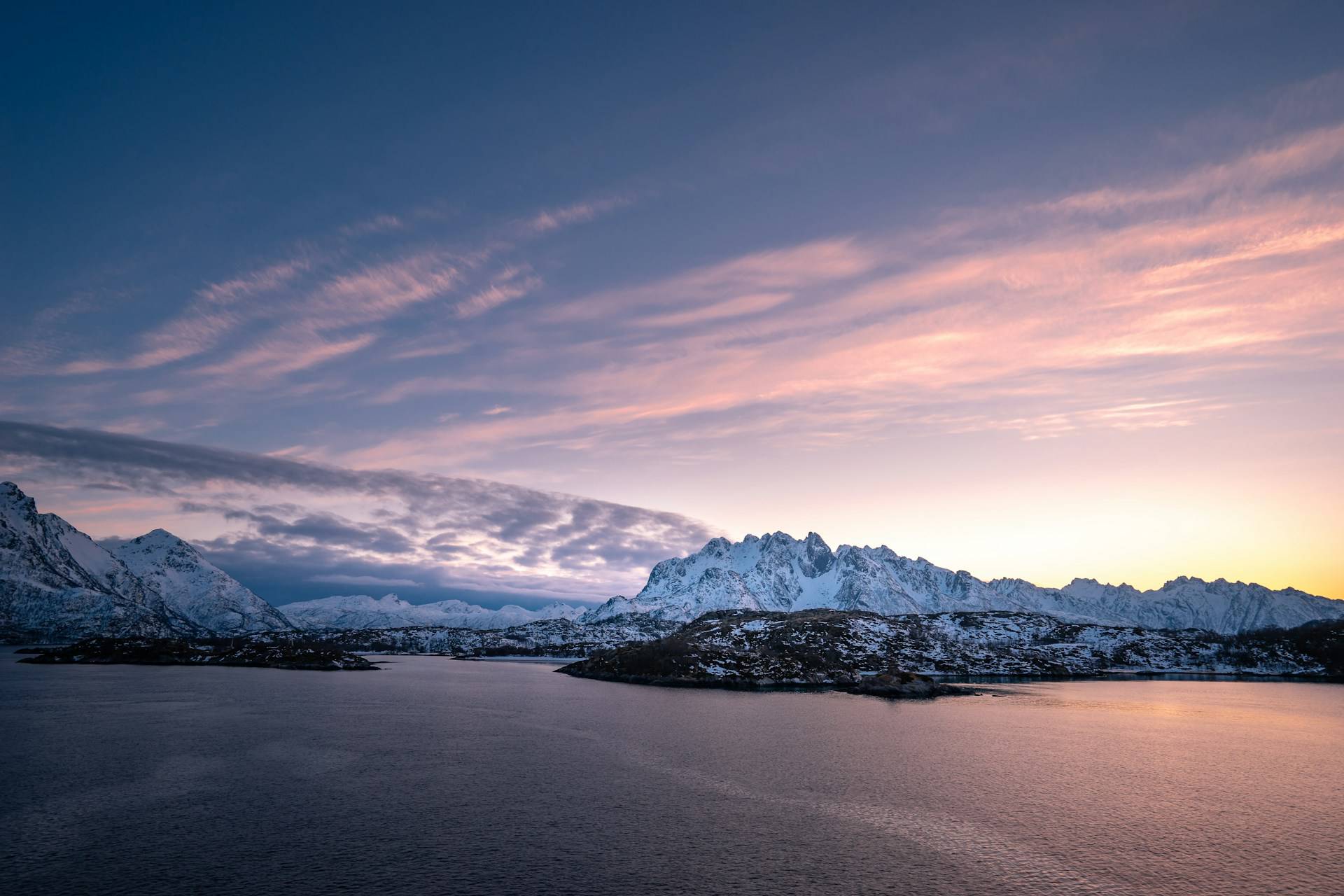
Your first day should be about getting your bearings and allowing yourself to adjust to Lofoten’s scale.
Morning: Arrive in Fredvang
Once you have settled into Fredvang Lodge, take some time to appreciate the landscape rather than immediately heading off again.
The surrounding scenery is reason enough to slow down. Lofoten’s distinctive character comes from the contrast between mountains and sea, with white beaches and small coastal settlements woven into the landscape.
If you arrive early enough, use the morning to get familiar with the local roads and decide how you want to spend the following day.
Afternoon: Explore the Coastal Landscape
A short trip to the surrounding beaches is an easy way to begin your Lofoten experience.
Ytresand Beach is particularly close to Fredvang, while the wider area is known for beaches framed by mountains and the sea. Visit Lofoten highlights the region’s beaches as some of its most distinctive natural attractions.
This is also a good time to simply photograph the landscape. Lofoten’s weather can shift quickly, so the same view can look completely different from one hour to the next.
Evening: Let the Landscape Set the Pace
The evening is best kept deliberately unstructured.
Depending on the season, you may have remarkably long daylight hours or the possibility of experiencing the Northern Lights. Lofoten’s Arctic position gives the islands a very different rhythm from a typical European weekend destination.
Rather than filling the evening with plans, keep some time free for the weather and light.
For photographers, the changing conditions can be particularly rewarding. For everyone else, it is simply an opportunity to enjoy being somewhere that feels far removed from everyday routines.
Day Two: Hike Towards Kvalvika and Ryten
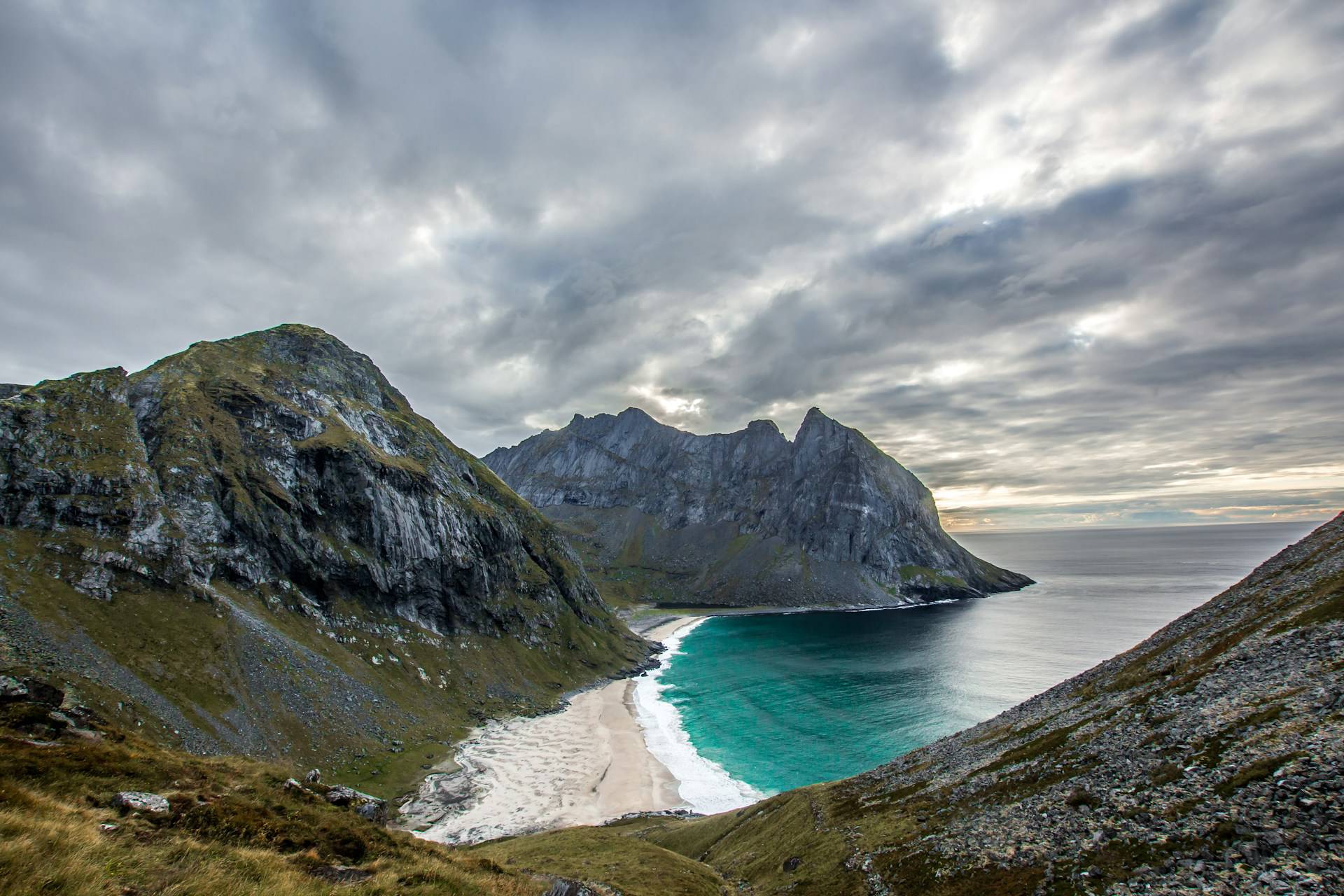
If your fitness, weather conditions and season allow, make your second day the outdoor highlight of your trip.
Morning: Head Towards Kvalvika
The Kvalvika and Ryten area is one of the most popular hiking landscapes in Lofoten. The route can be approached from Fredvang, making it a natural choice when staying in the area.
Kvalvika itself is known for its dramatic combination of sandy beach, open sea, and steep mountains. The official hiking guide lists the journey to the beach at around 1.5 hours each way, while the route towards Ryten takes longer.
For a 48-hour trip, you can choose the route that suits your experience and the conditions rather than feeling obliged to complete the entire hike.
Before You Go
Lofoten’s mountain landscapes can be more demanding than photographs suggest. Weather conditions can change rapidly, and the official tourism guidance recommends checking the forecast, carrying warm clothing, and using marked trails.
In 2026, trail work is also taking place in parts of the Kvalvika and Ryten area between 22 June and 30 September, with diversions and occasional closures possible. Travelers should check current local guidance before setting out.
Afternoon: Take the Scenic Route Back
After a morning outdoors, resist the temptation to fill the afternoon with another long list of stops.
Instead, take your time returning through the surrounding landscape. Lofoten’s National Scenic Route is designed around the relationship between road, mountains, sea and coastal culture, so the journey itself becomes part of the experience.
Stop when the scenery catches your attention, take photographs, and allow extra time for changing weather or road conditions.
Evening: Your Final Lofoten Hours
Use your final evening to slow down.
After a day outside, Fredvang Lodge provides a comfortable place to return to and reflect on the trip. Rather than rushing towards one final attraction, make the most of the feeling of being surrounded by mountains and sea.
That is perhaps the best way to end 48 hours in Lofoten: with the sense that you have experienced a place rather than simply visited it.
What Makes Fredvang a Good Base?
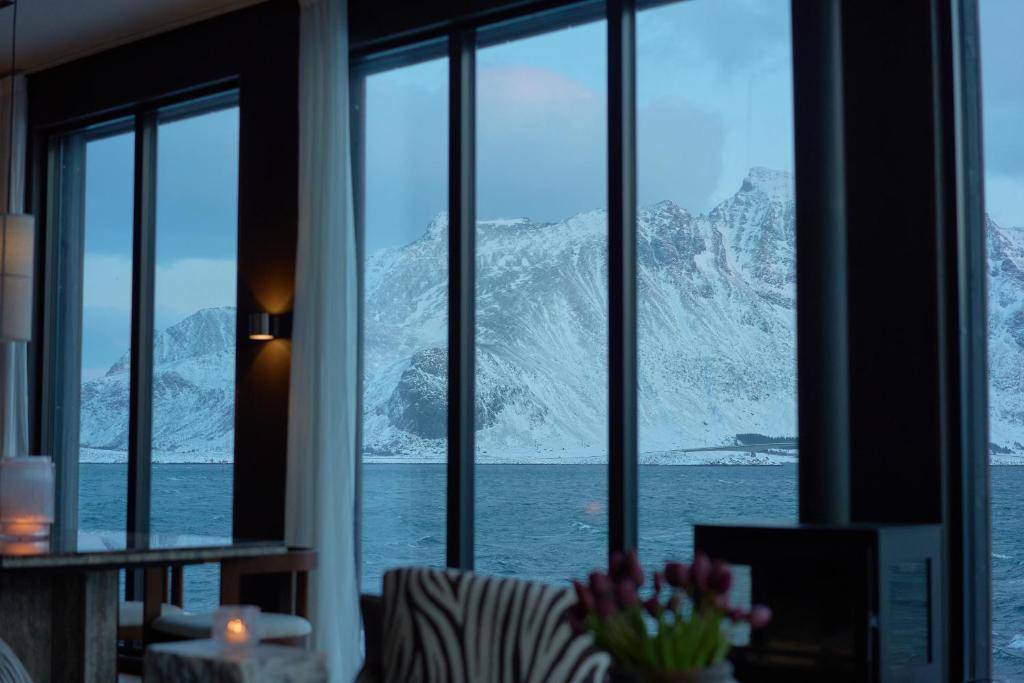
For a short trip, choosing the right base can make a significant difference.
Fredvang places you close to some of the natural experiences that make this part of Lofoten particularly appealing. The Kvalvika and Ryten hiking route begins around Fredvang, while Ytresand Beach is also nearby.
The area also suits a slower style of travel. Instead of spending your two days constantly packing, driving and checking into different accommodation, you can establish one base and build your itinerary around it.
That matters in Lofoten. The landscape is not something to rush through.
Planning Your 48 Hours in Lofoten
Choose the Season Carefully
The experience of Lofoten changes dramatically throughout the year.
Summer offers long days and the possibility of the midnight sun. Autumn brings changing colors and a quieter atmosphere, while winter can offer snowy landscapes and Northern Lights opportunities.
Check the Weather Before Hiking
Mountain weather can change quickly. Always check current conditions before setting out and make sure your clothing and footwear are appropriate for the route.
Visit Lofoten specifically recommends checking the weather forecast and carrying warm clothing when hiking.
Leave Room for Spontaneity
The best moments in Lofoten are not always the ones you schedule.
A sudden change in light, a quiet beach, or a dramatic view around a bend can easily become the highlight of your trip. Keep your itinerary flexible enough to accommodate those moments.
Travel Responsibly
Lofoten’s landscapes are beautiful but vulnerable. Staying on marked trails, respecting wildlife, taking rubbish with you, and following local restrictions all help protect the environment for residents and future visitors.
The official tourism organizations in Lofoten and Norway both emphasise responsible travel in the region.
Hygge Cottages Team Insight
A short break in Lofoten does not need to feel rushed. Our favorite approach is to choose one characterful base, plan one standout outdoor experience, and leave plenty of time for the landscape itself. Fredvang works beautifully for this style of travel because the surrounding scenery becomes part of the stay rather than something you simply drive through.
Conclusion
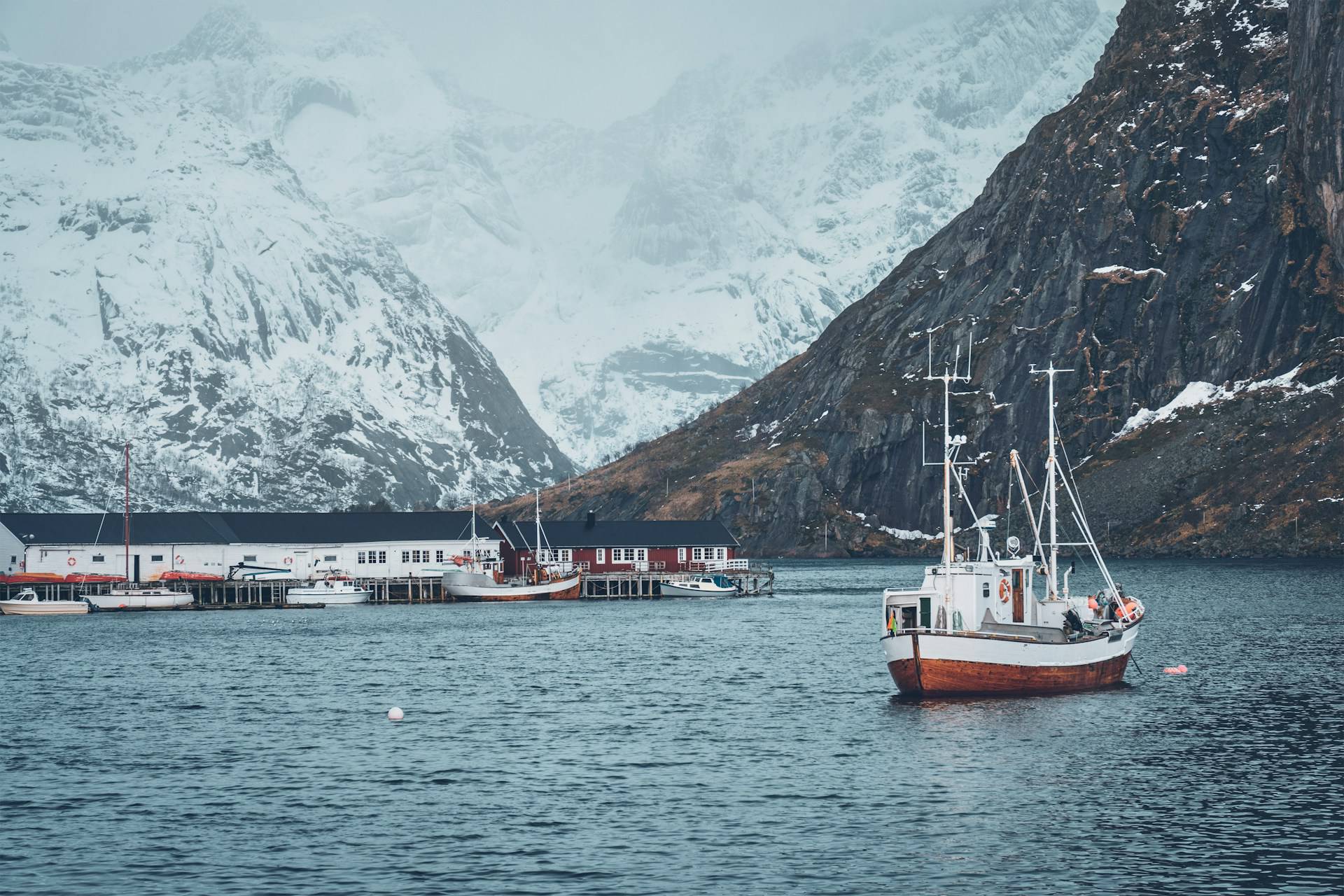
A well-planned 48 hours in Lofoten can be enough to understand why this corner of Norway has become such a sought-after destination for nature lovers and slow travelers.
The key is choosing experiences that suit the time you have. Begin with the scenery around Fredvang, settle into Fredvang Lodge, Lofoten, spend time by the coast, and, if conditions allow, make the journey towards Kvalvika and Ryten the centerpiece of your second day.
Most importantly, do not measure the success of your trip by the number of places you manage to visit.
Lofoten is at its best when you have time to look up from the map, watch the light change across the mountains, and simply enjoy being there.
For a two-day escape, that may be more than enough.
FAQs
1. Is 48 hours enough for Lofoten?
Yes. Two days is enough to enjoy Lofoten’s dramatic scenery, explore the area around Fredvang, and fit in a memorable hike.
2. Where should I stay in Lofoten for a short trip?
Fredvang Lodge, Lofoten, is a great base for exploring the surrounding landscape, beaches, and hiking routes.
3. What can I see in Lofoten in two days?
You can explore Fredvang, visit nearby beaches, enjoy scenic drives and, depending on the weather, hike towards Kvalvika and Ryten.
4. Is Kvalvika Beach worth visiting?
Absolutely. Kvalvika is known for its beautiful sandy beach, mountain views, and dramatic coastal setting. It is one of the area’s standout outdoor experiences.
5. When is the best time to visit Lofoten?
Summer is ideal for long daylight hours and the midnight sun, while the darker months offer the chance to see the Northern Lights.
6. What should I pack for Lofoten?
Bring comfortable walking shoes, warm layers, and waterproof clothing. Weather can change quickly, especially when you’re hiking in the mountains.

0 Comment